Cash Flow Forecast: How to Build One That Works
How to build a cash flow forecast for your small business: a simple 13-week method, what to include, common mistakes and how software keeps it up to date.
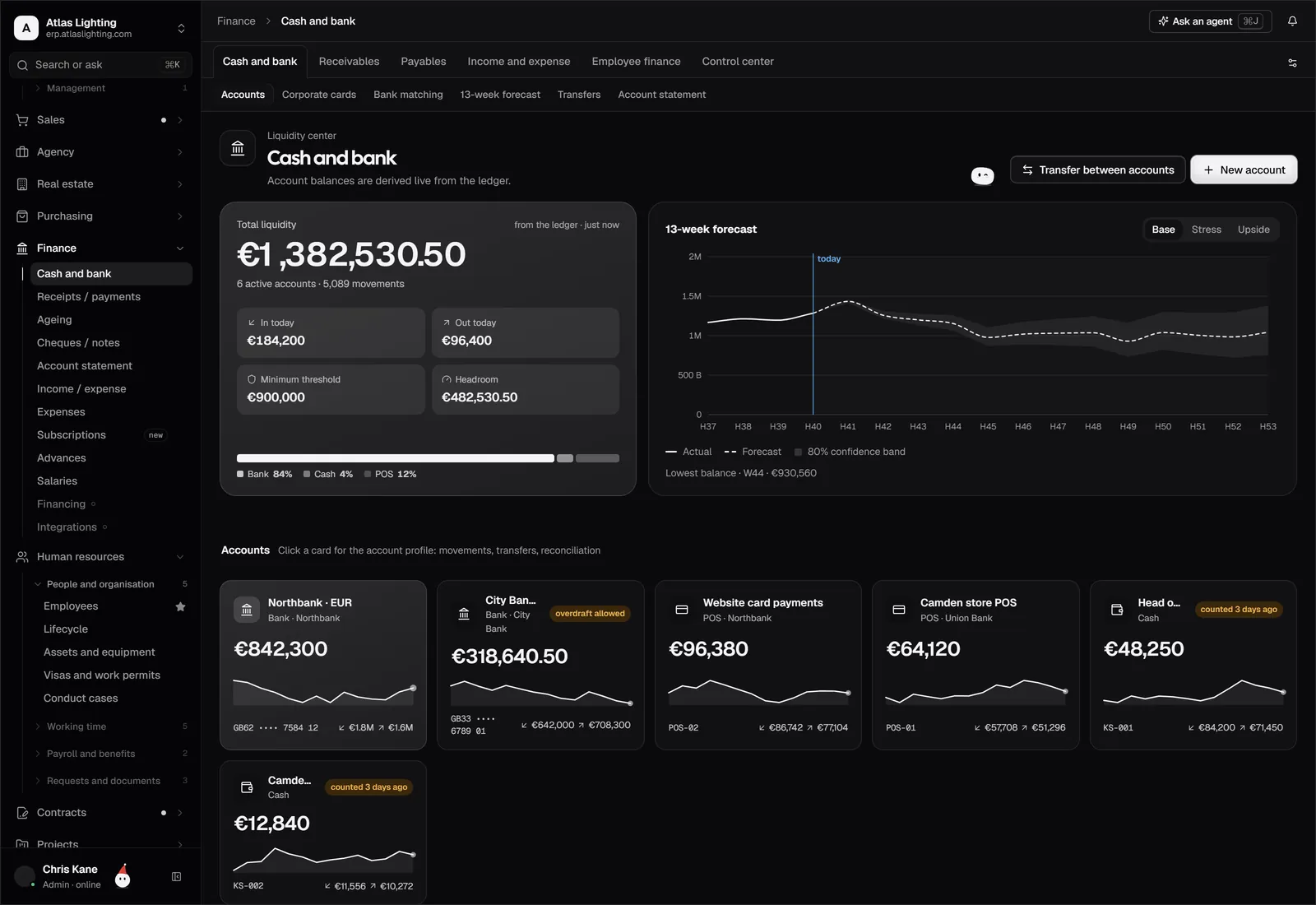
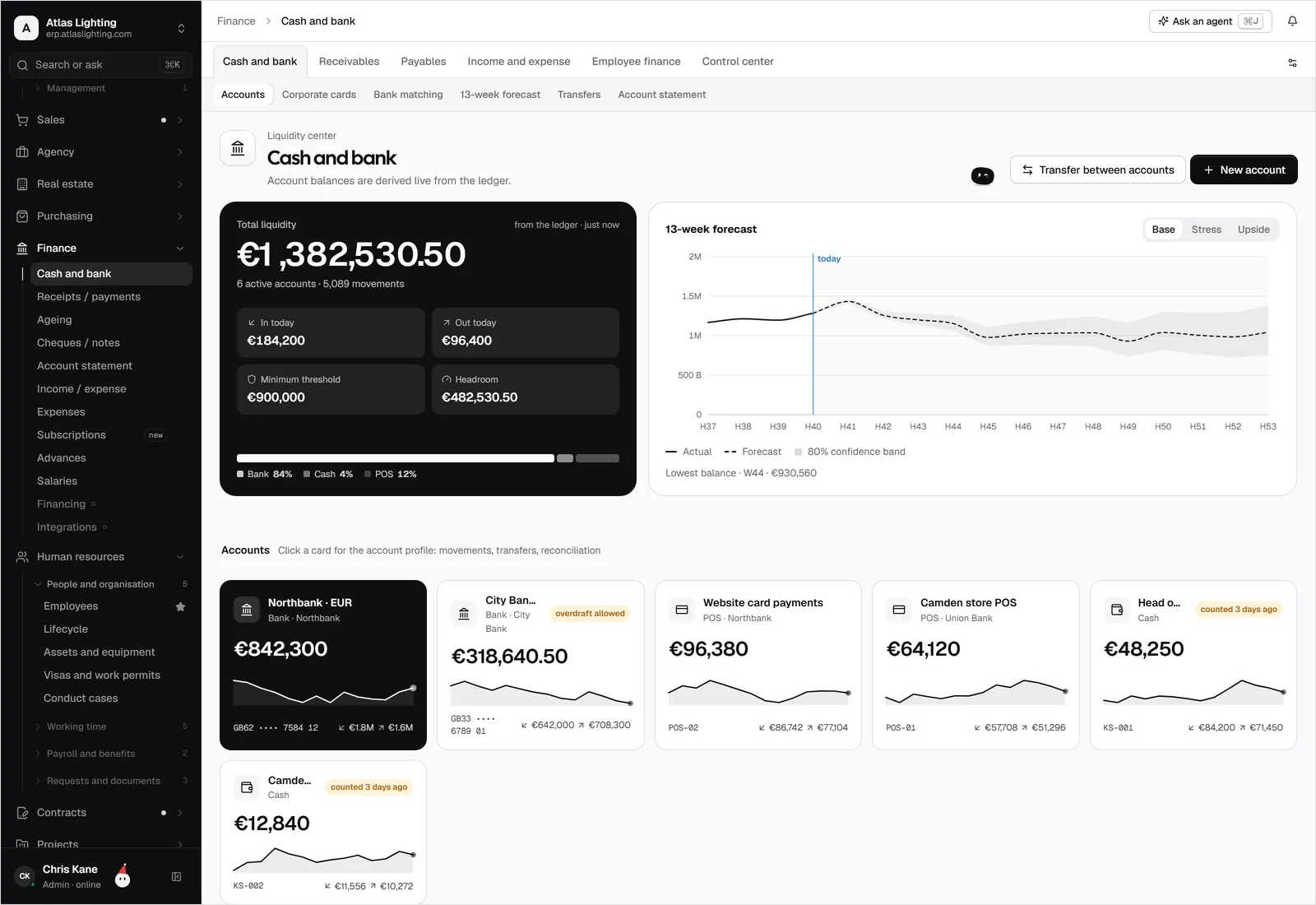
A cash flow forecast is a simple projection of the money you expect to receive and pay out over the coming weeks or months, so you can see a shortfall before it arrives. The easiest way to start is a rolling 13-week forecast: list expected cash in, list expected cash out, and track the running balance week by week.
Profitable companies run out of cash all the time. You can have a full order book and still miss payroll if customers pay in 60 days while suppliers want money in 30. A forecast shows that gap while you can still do something about it.
Cash flow versus profit
Profit is revenue minus costs, recognised when you invoice and when you incur expense. Cash flow is when money actually moves. The two diverge because of timing:
- You invoice in March; the customer pays in May.
- You buy stock in January; you sell it in April.
- You pay an annual insurance premium in one lump.
- You buy equipment that is spread across years in the accounts but leaves your bank today.
Your forecast is about the bank balance, not the profit and loss account.
Why 13 weeks?
Thirteen weeks is a quarter. It is long enough to see problems coming and short enough that your estimates stay reasonably accurate. Beyond that, forecasts become guesses. Many finance teams keep the 13-week view rolling: each week they drop the week just gone and add a new one at the end.
For longer-term planning, such as hiring or investment, keep a separate monthly forecast covering 12 months. Use the weekly one for day-to-day decisions.
What to include: cash in
Start from your opening bank balance, then list expected receipts by week.
- Customer payments. Work from your open invoices and each customer’s actual payment behaviour, not their terms. If a customer on 30-day terms usually pays in 50, forecast 50.
- New sales. Orders and quotes you expect to convert, invoiced and then paid with the same delay.
- Other income. Deposits, interest, grants, asset sales, tax refunds.
- Financing. Loan drawdowns or owner investment, only if they are agreed.
What to include: cash out
- Supplier payments. Bills already received, plus purchase orders you have committed to.
- Payroll and related costs. Salaries, employer contributions, pensions, benefits.
- Rent, utilities and subscriptions.
- Tax payments. Check the dates with your accountant, because large payments often catch businesses out.
- Loan repayments and interest.
- Capital spending. Equipment, vehicles, fit-out.
A simple forecast layout
| Line | Week 1 | Week 2 | Week 3 | Week 4 |
|---|---|---|---|---|
| Opening balance | ||||
| Customer receipts | ||||
| Other receipts | ||||
| Supplier payments | ||||
| Payroll | ||||
| Rent and overheads | ||||
| Tax and loans | ||||
| Closing balance |
Each week’s closing balance becomes the next week’s opening balance. The line to watch is the lowest point of the closing balance, because that tells you how much cushion you need.
How to build it step by step
- Get the starting balance right. Use the actual bank balance, not the ledger.
- Load known items first. Payroll, rent and open supplier bills are predictable.
- Add receivables by expected date. Be realistic about late payers.
- Layer in expected sales and purchases. Mark which are certain and which are hopeful.
- Build scenarios. A cautious case where your biggest customer pays two weeks late shows how fragile the plan is.
- Review weekly. Replace forecast numbers with actuals and extend the horizon.
Common mistakes
- Using payment terms instead of real behaviour. This is the most common source of nasty surprises.
- Forgetting irregular payments. Annual fees, quarterly taxes and bonuses.
- Mixing profit and cash. Depreciation is not cash; a stock purchase is.
- Never updating it. A forecast built once and left is a snapshot, not a tool.
- Making it too detailed. Fifty lines you never maintain are worse than fifteen you review every Monday.
Ways to improve cash flow
Once you can see the gaps, you can act on them:
- Invoice promptly and chase overdue payments consistently.
- Offer a deposit or staged payments on large jobs.
- Negotiate supplier terms, or stagger payment runs.
- Order stock in line with demand rather than in big speculative batches.
- Keep a standing credit line for emergencies, arranged before you need it.
Spreadsheet or software?
A spreadsheet is a fine place to start. The problem comes later: every figure has to be copied in from invoices, bills and orders, so the forecast is only as fresh as the last person who updated it.
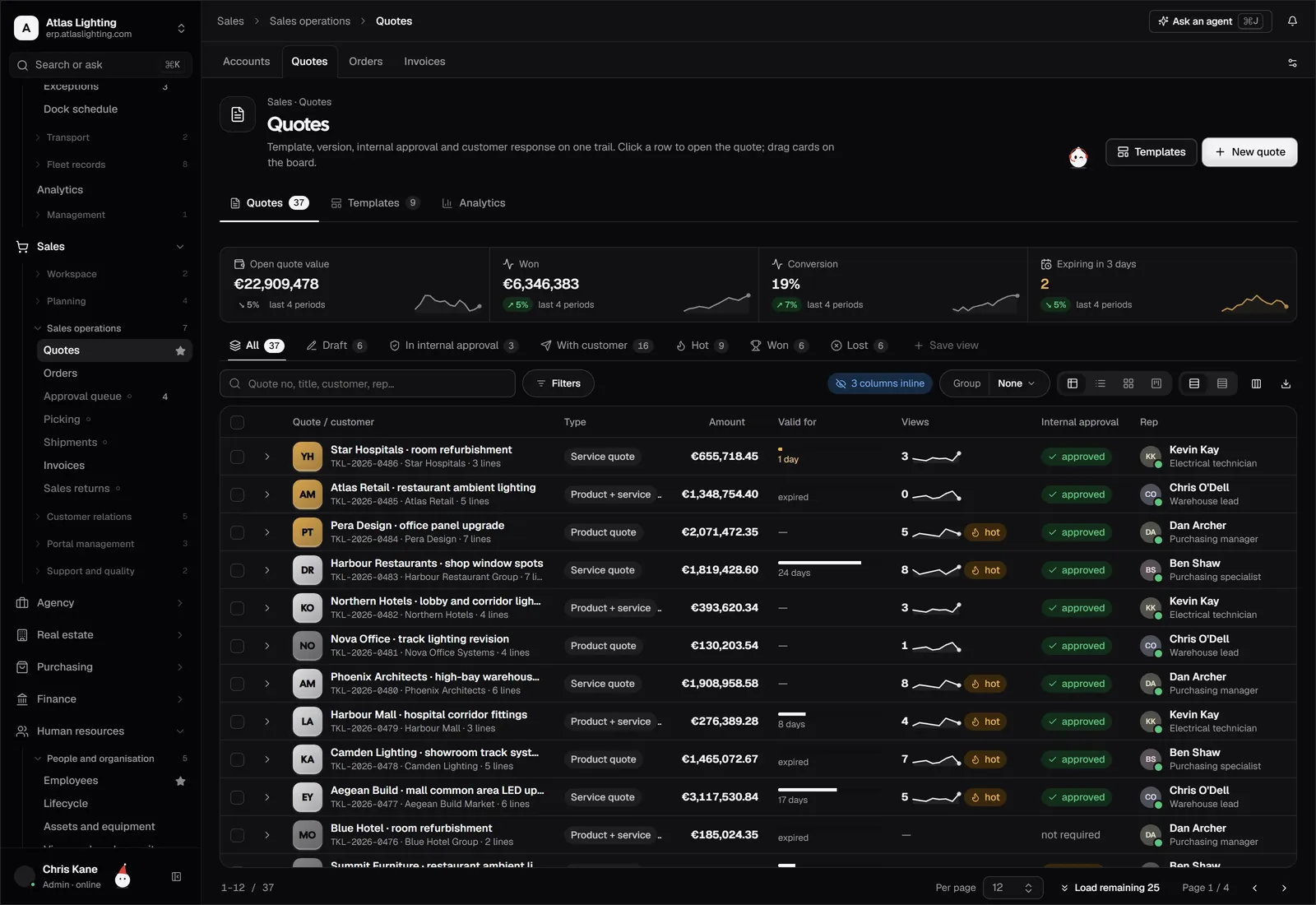
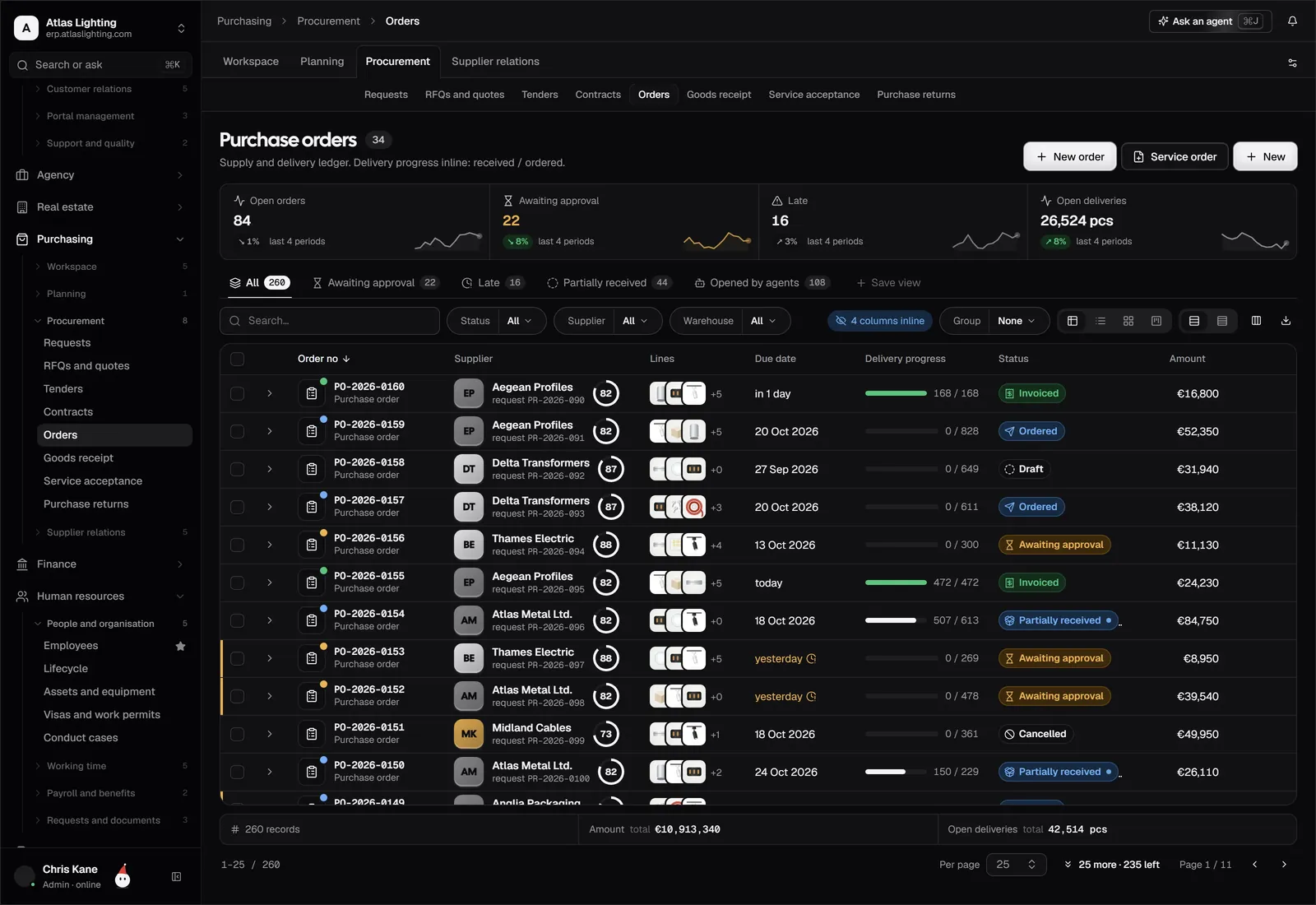
Software that already holds your invoices, bills, purchase orders and sales pipeline can build the forecast from live data. In Dika Ops, finance sits alongside sales and purchasing, so the same records that drive operations feed your cash view, and you don’t retype them.
FAQ
How often should I update my cash flow forecast?
Weekly for a 13-week forecast. Replace last week’s estimates with actuals, then add a new week at the end.
What is the difference between a cash flow forecast and a budget?
A budget sets targets for income and spending. A cash flow forecast predicts when money will actually arrive and leave, which is what determines whether you can pay your bills on time.
How accurate does a forecast need to be?
Accurate enough to show trouble early. Near-term weeks should be close; later weeks will be rougher. Review the gap between forecast and actual to improve your assumptions.
What if my forecast shows a shortfall?
Act early: chase receivables, delay non-essential spending, renegotiate payment dates or talk to your bank. Options narrow quickly once the problem is days away rather than weeks.
Closing thought
A cash flow forecast is a habit more than a document. Dika Ops is an AI-native ERP, currently in closed beta, that keeps invoices, purchasing and finance in one place. If you’d like to try it, join the waitlist.