Purchase Order Process: Steps and Best Practice
The purchase order process explained step by step: from requisition to payment. Learn what a PO contains, common mistakes and how to control spend.
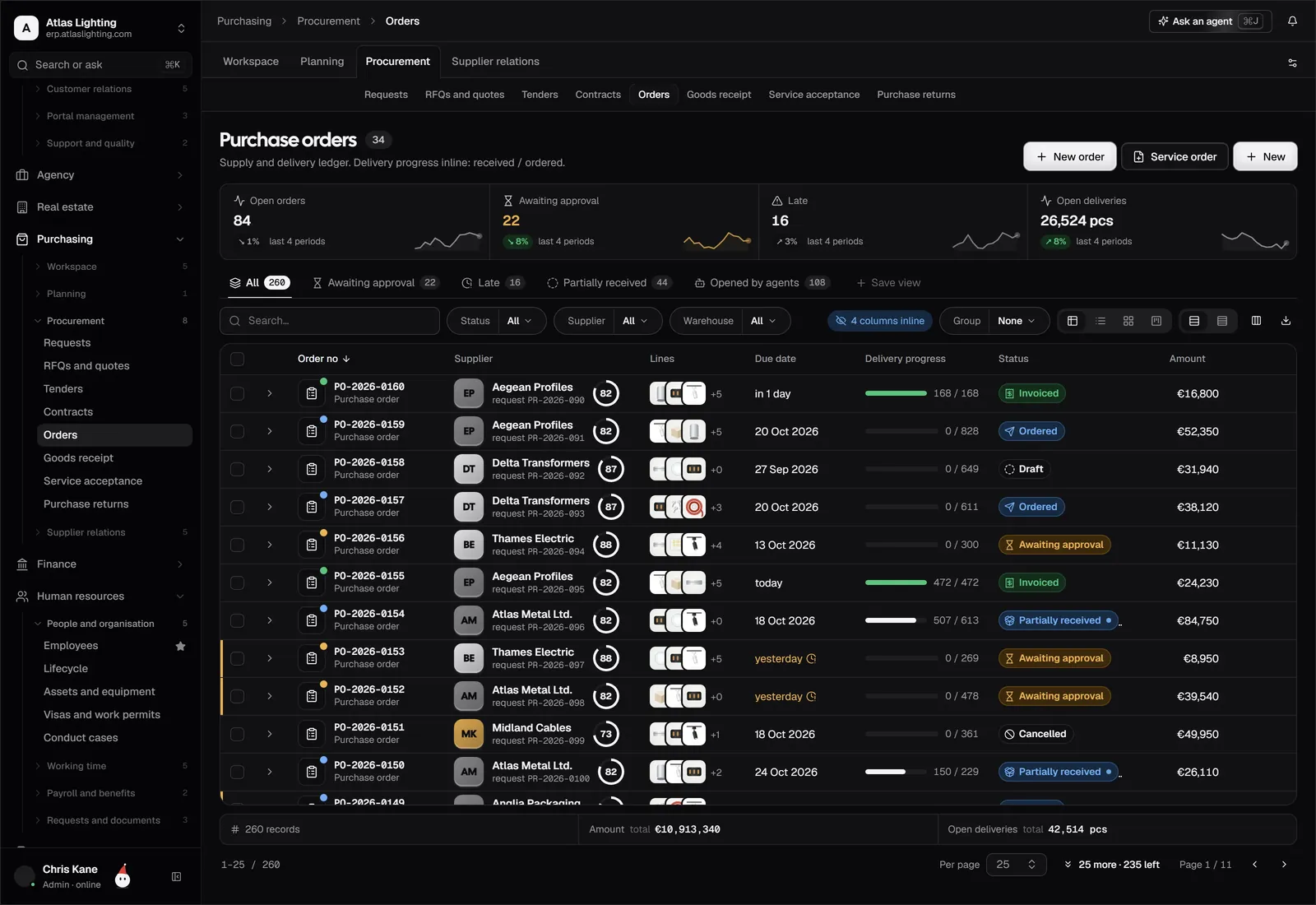
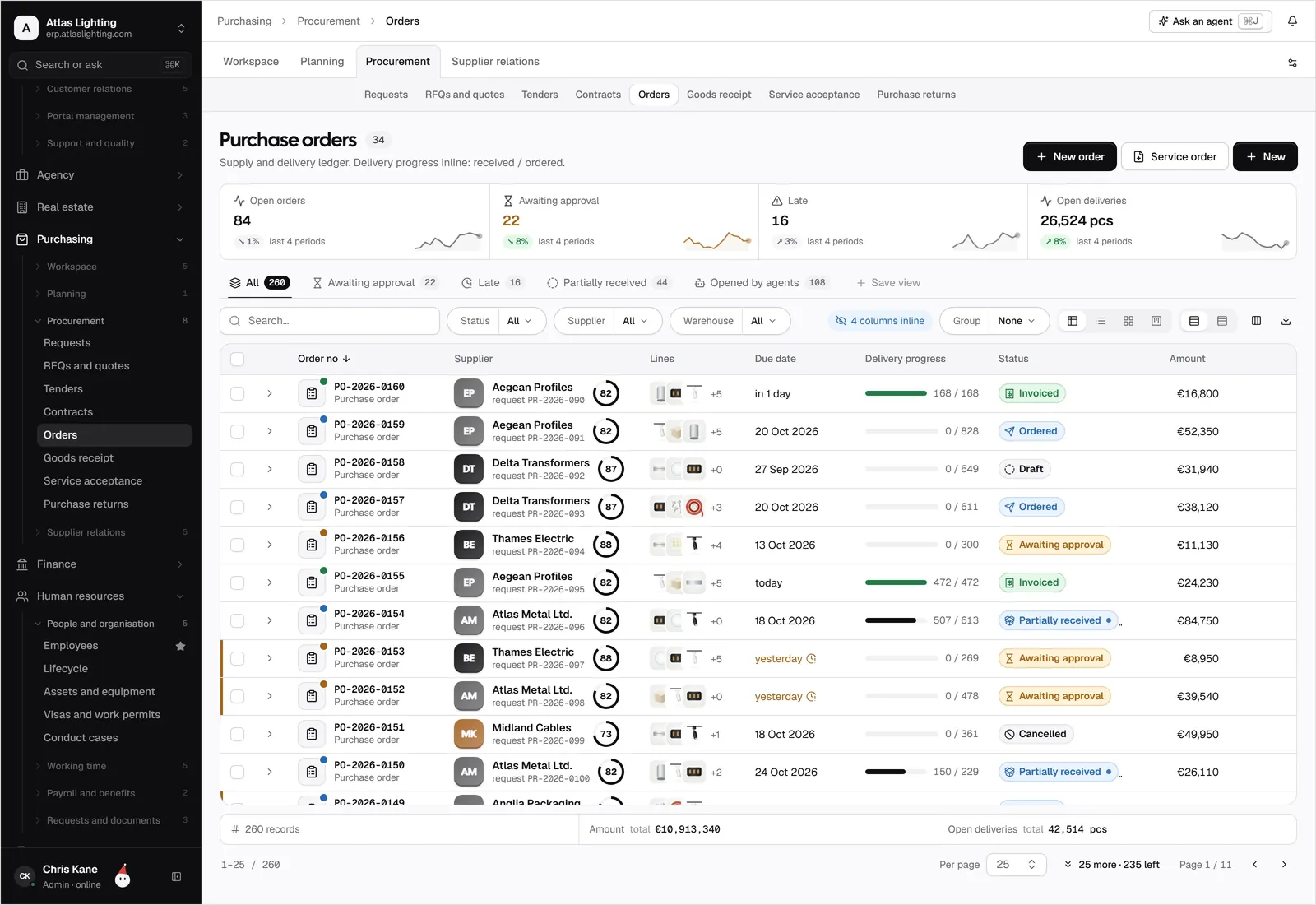
The purchase order process is the series of steps a business follows to buy goods or services: someone requests an item, a manager approves it, a purchase order (PO) is sent to the supplier, the goods are received and checked, and the supplier invoice is matched and paid. A clear process protects your budget, avoids duplicate orders and gives you proof of what was agreed.
This guide walks through each step, explains what a PO should contain, and shows where small businesses most often go wrong.
What is a purchase order?
A purchase order is a document a buyer sends to a supplier stating exactly what is being bought, in what quantity, at what price and on what terms. Once the supplier accepts it, it becomes a record of the agreement. It protects both sides: the supplier knows what to deliver and the buyer knows what they are committed to pay.
A PO is not an invoice. The PO comes first and is issued by the buyer. The invoice comes later and is issued by the supplier to request payment.
The purchase order process, step by step
1. Purchase requisition
Someone identifies a need: a warehouse lead sees stock running low, a production planner needs materials, an office manager needs equipment. They raise a requisition describing what is needed and when. Keeping requests in writing, rather than in hallway conversations, is the first control.
2. Supplier selection and quotes
For anything beyond a routine reorder, compare options. Request quotes from two or three suppliers and compare price, lead time, minimum quantities and payment terms. For repeat items, a preferred supplier with an agreed price list saves time.
3. Approval
Match the approval to the value. A common pattern is that small amounts need only a team lead, mid-range amounts need a department head, and large amounts need a director. Set the thresholds that suit your company and apply them consistently.
4. Create and send the PO
The approved request becomes a purchase order, numbered in sequence and sent to the supplier. The supplier should confirm it, ideally in writing.
5. Goods receipt
When the delivery arrives, check it against the PO: right items, right quantity, acceptable condition. Record what was actually received, including partial deliveries. This record is the evidence you will use to approve the invoice.
6. Invoice matching
When the supplier invoice arrives, compare it with the PO and the goods receipt. If all three agree, the invoice is approved for payment. This is known as a three-way match.
7. Payment and records
Pay according to the agreed terms and keep the PO, receipt and invoice together. Good records make audits, disputes and budget reviews far easier.
What a purchase order should contain
A complete PO leaves no room for argument. Include:
- A unique PO number
- Your company name and delivery address
- Supplier name and contact
- Date of issue and requested delivery date
- Description of each item, with part number or SKU
- Quantity and unit of measure
- Agreed unit price and currency
- Tax treatment, shipping and any discounts
- Payment terms
- Authorised signatory or approver
If you work from a purchase order template, keep it short and make sure every field above has a place.
Three-way match explained
The three-way match compares three documents before paying:
| Document | Created by | Confirms |
|---|---|---|
| Purchase order | Buyer | What was ordered and the agreed price |
| Goods receipt | Warehouse | What actually arrived |
| Supplier invoice | Supplier | What the supplier is asking to be paid |
If the quantity invoiced is higher than the quantity received, or the price differs from the PO, you query it before paying. This one habit prevents a surprising amount of overpayment.
Common mistakes in the purchase order process
- Buying without a PO. Orders placed by phone or email, with no document, are hard to track and easy to duplicate.
- No approval limits. Anyone can commit the company to any amount.
- Skipping goods receipt. Without a receipt, you cannot tell whether you are paying for something that arrived.
- Editing orders informally. Quantities change over email and the PO no longer reflects reality.
- Scattered records. POs in inboxes, invoices in a shared drive and receipts in someone’s head.
Manual vs software-supported POs
Many small businesses start with a spreadsheet or a word-processor template. That works at low volume, but it has limits: numbers get duplicated, approvals happen by message, and nobody can see open orders at a glance.
Purchasing software helps by numbering POs automatically, routing approvals, linking each PO to expected stock, and tracking what is still outstanding. It can also compare supplier quotes side by side, which matters when you run a formal tender or request for quotation. Look at how the PO ties into purchasing and inventory: when the receipt updates stock automatically, you remove a whole layer of re-keying.
Controlling spend with the process
A PO process is a budget tool as much as an admin tool. Because every commitment is recorded before the money leaves, you can see open commitments, not just paid invoices. That gives a more honest view of what you have already promised to spend. Review open POs regularly: old orders that were never fulfilled should be closed or chased.
Where AI fits
AI can handle routine parts of the process, such as drafting a PO from a reorder suggestion or flagging an invoice that does not match its order. In Dika Ops, an AI buyer coworker can prepare orders within strict permissions, but a person approves anything important. Read more about AI coworkers.
FAQ
What is the difference between a purchase order and an invoice?
A purchase order is issued by the buyer to request goods or services at agreed terms. An invoice is issued by the supplier afterwards to request payment. Matching the two is a key control.
Is a purchase order legally binding?
Once a supplier accepts a PO, it generally forms part of a contract between the parties. The exact position depends on your terms and jurisdiction, so check with a legal adviser for anything significant.
Do small businesses need purchase orders?
Not for every tiny purchase, but for anything repeated, high-value or involving stock, a PO gives you control and a paper trail that protects you in disputes.
What is a blanket purchase order?
It is an agreement to buy a set quantity or value from a supplier over a period, with individual deliveries released against it. It suits regular, predictable purchases.
Next step
A purchase order process works best when approvals, receipts and invoices live in the same place. Dika Ops connects purchasing with stock and finance, and it is in closed beta. You can join the waitlist to be considered for early access.