Sales Quote: What to Include and How to Win
How to write a sales quote that wins business: what to include, a simple template, follow-up tips and how quoting software cuts errors and delays.
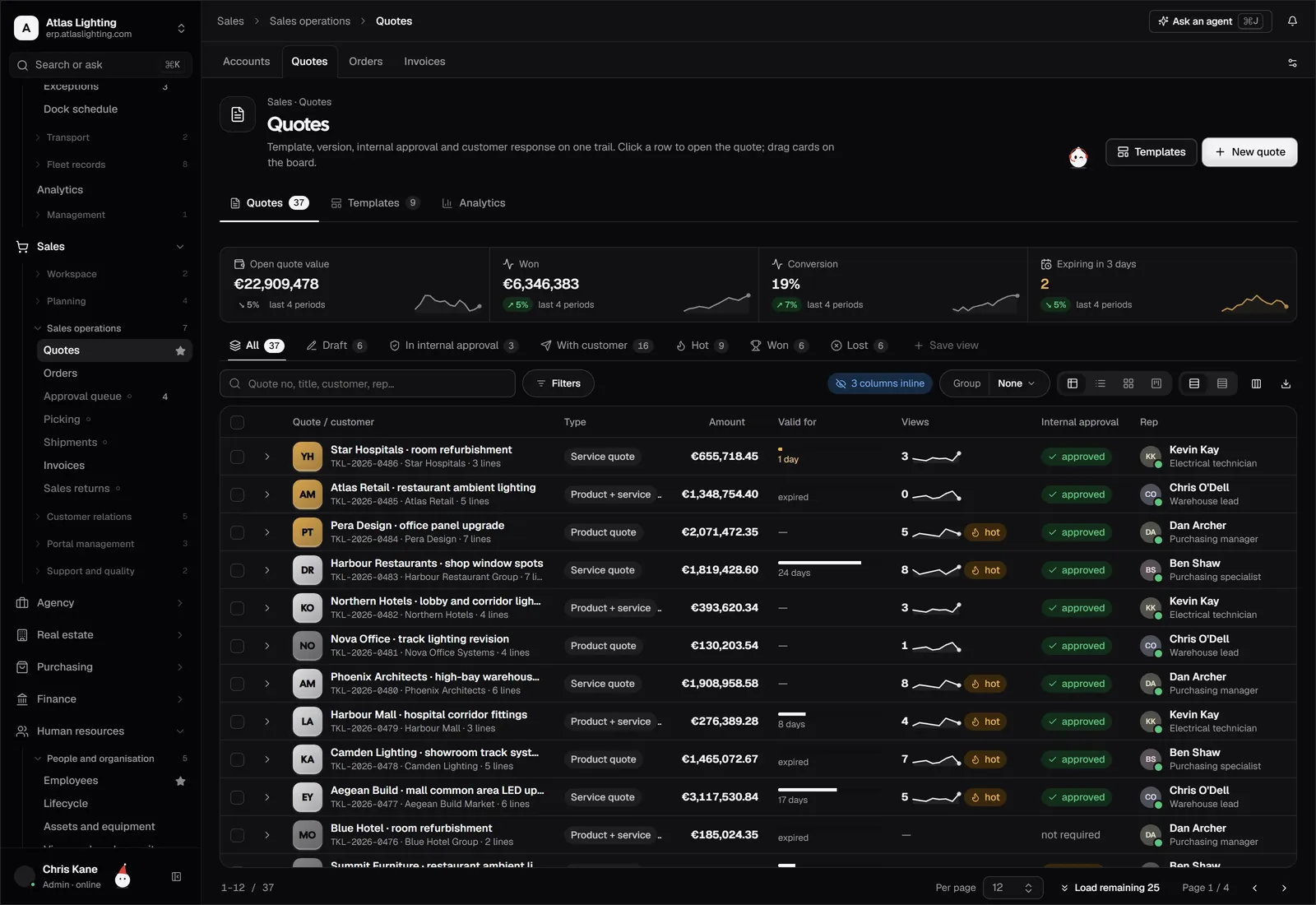
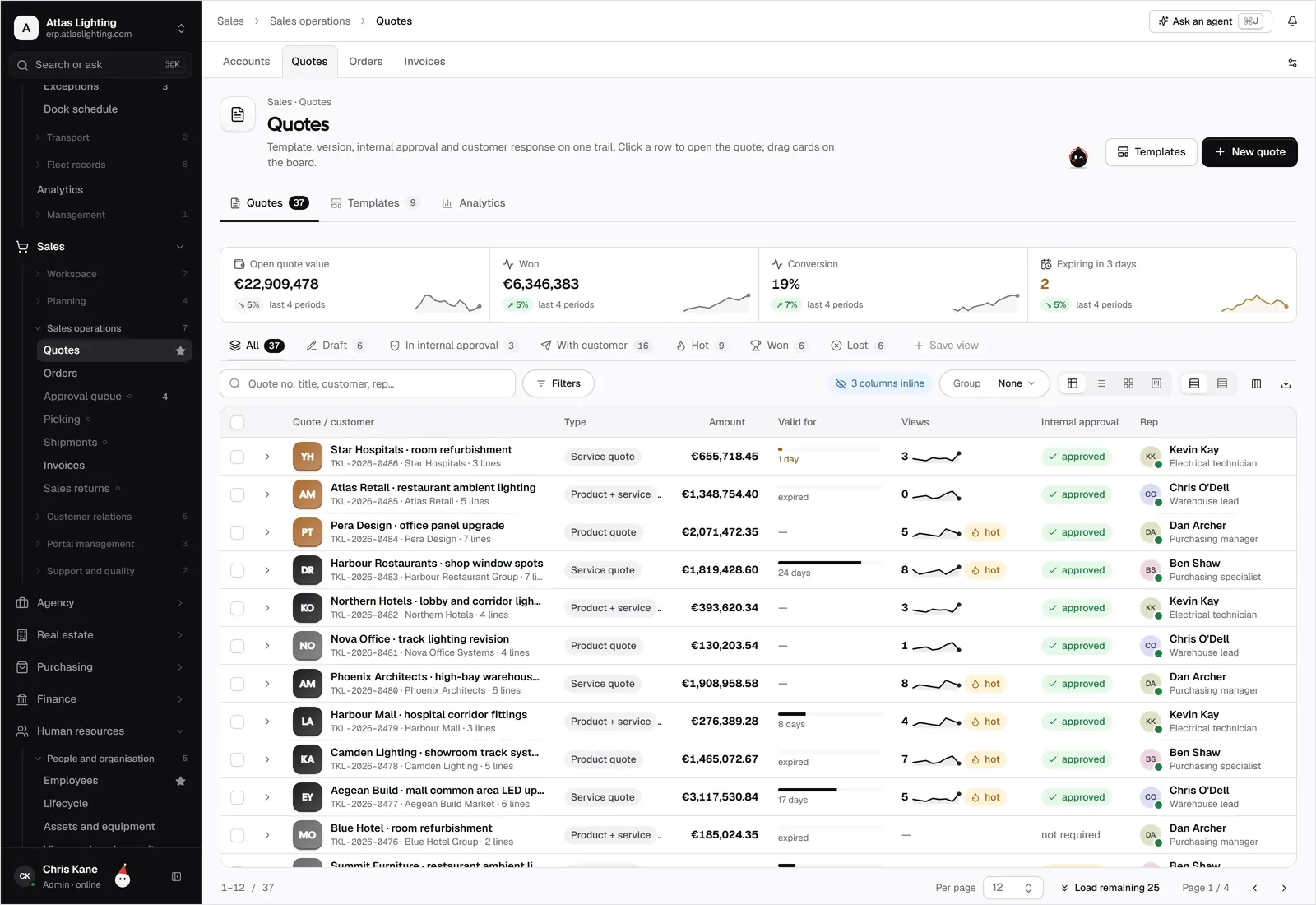
A sales quote is a document that tells a customer exactly what you will supply, at what price and on what terms. A good one is clear, accurate, quick to produce and easy to accept, because the faster and cleaner your quote, the more likely it is to win.
This guide covers what to include, a simple template, how to follow up, and when to stop doing quotes by hand.
Quote, estimate or proposal?
The words overlap, but they are not identical:
- Quote (or quotation): a fixed price for a defined scope, usually valid for a set period.
- Estimate: an approximate figure that may change.
- Proposal: a longer document that explains an approach and why you are the right choice, often with pricing inside.
For goods and standard services, a quote is usually what customers want. Be clear which one you are sending, because an “estimate” the customer treats as a fixed price leads to disputes.
What a sales quote should include
A complete quote answers every question the buyer would otherwise have to email you about.
| Element | Why it matters |
|---|---|
| Your details and the customer’s | Correct legal names and contacts |
| Quote number and date | Easy reference for both sides |
| Validity period | Prices can change; say how long the offer stands |
| Itemised lines | Description, quantity, unit price, line total |
| Discounts | Shown clearly, not buried in the total |
| Tax | Shown separately where applicable |
| Delivery cost and lead time | Avoids a common surprise |
| Payment terms | Deposit, due date, accepted methods |
| Terms and conditions | Or a link or reference to them |
| Next step | How to accept, and by when |
Use the same layout every time. Customers compare quotes, and a tidy one signals a tidy supplier.
A simple quote template
- Header: your logo, details, the quote number, date and expiry date.
- Customer block: company name, contact, delivery address.
- Summary line: one sentence describing what is being supplied.
- Line items: product or service, quantity, unit price, total.
- Totals: subtotal, discounts, delivery, tax, grand total.
- Terms: payment terms, lead time, validity, warranty or returns reference.
- Acceptance: “To accept, reply to this email or sign below,” plus a signature line if you want one.
How to price a quote properly
Underpricing wins work you regret. Before you send a quote, check:
- Current costs. Supplier prices move. If your quote uses last year’s cost, you may be selling at a loss.
- Stock and lead time. Can you actually deliver by the date you promise?
- Margin. Know your minimum margin and whether a discount drops you below it.
- Customer history. Their payment record and past order sizes should shape the terms you offer.
This is where disconnected tools hurt. If prices live in one file, stock in another and customer history in someone’s head, every quote is slow and risky.
Tips for winning more quotes
- Respond fast. Speed often decides between similar suppliers.
- Be specific. Vague scope invites price-only comparison.
- Offer options. Good, better, best, or a standard and an express delivery, lets the customer choose rather than walk away.
- Explain value briefly. One or two lines on why your lead time, quality or service matters.
- Make accepting easy. One reply, one click or one signature.
- Follow up. Many quotes are lost simply because nobody checked back.
A follow-up routine that works
- Day 0: send the quote and confirm receipt.
- Day 2 to 3: a short message asking whether they have questions.
- Before expiry: remind them the price is valid until a given date.
- After expiry: ask whether the project is still live, and offer to refresh the quote.
Keep a record of every outcome, including lost quotes and the reasons given. That history is valuable when you review pricing.
Common quoting mistakes
- Leaving out delivery costs or lead times.
- Forgetting a validity date.
- Quoting from outdated price lists.
- Misspelling the customer’s name or address.
- Retyping quote lines into the order afterwards, introducing errors.
- Having no central record, so colleagues quote the same customer differently.
When to move beyond manual quoting
Word and spreadsheet quotes are fine at low volume. Consider quoting software when you are producing many quotes each week, working with several people, or retyping approved quotes into orders and invoices.
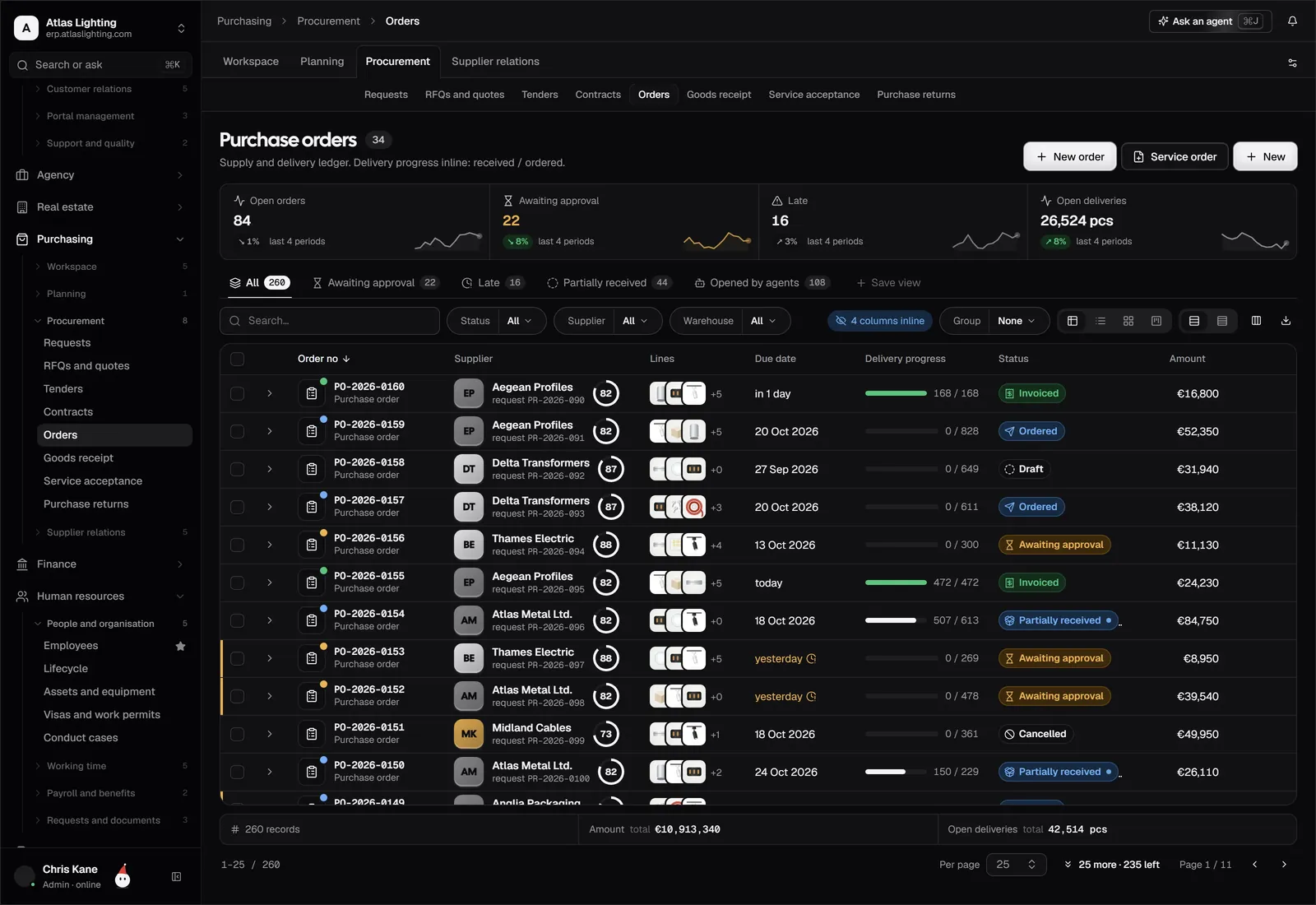
In Dika Ops, quotes sit in the same system as products, stock, customers and orders, so a quote uses current product data and an accepted quote becomes an order without retyping. The CRM keeps the history of each opportunity in one place. An AI coworker can draft quotes and follow-ups, with a person approving before anything goes out.
FAQ
How long should a quote be valid?
Commonly 14 to 30 days, though it depends on how quickly your costs change. For volatile materials, use a shorter period and say so clearly.
Is a quote legally binding?
That depends on your jurisdiction and how the quote is worded and accepted. Terms matter, so have your terms and conditions reviewed by a professional rather than relying on a general guide.
Should I show my costs and margin on a quote?
No. Customers see the price, not your cost. Keep margin calculations internal.
What is the difference between a quote and a pro forma invoice?
A quote is an offer before the customer commits. A pro forma invoice is often issued once the order is agreed, for example to request prepayment, and is not a final tax invoice.
Next step
Faster, more accurate quotes win more work. Dika Ops is an AI-native ERP, currently in closed beta, that connects quoting to stock, orders and invoicing. To see whether it suits your business, join the waitlist.